The tragedy of Punch the monkey: Why do mother animals abandon their newborns?
After being abandoned by her mother in her early months, Punch clung to a stuffed animal for a sense of security. Experts explain why animals refuse to care for their offspring.
 |
| Punch the monkey is pictured with a stuffed animal at a zoo in Japan, after being abandoned by its mother shortly after birth. Photo: David Mareuil . |
Punch the monkey was born in July 2025 at the Ichikawa City Zoo in Chiba Prefecture, Japan. The animal quickly attracted global attention when zoo staff gave it a stuffed orangutan after it was abandoned by its mother, according to The Guardian.
Without its mother by its side to guide and protect it, Punch sought solace in its toys. Numerous videos show it being dragged and chased by larger monkeys in its enclosure.
In the early videos, Punch is seen sulking alone with its stuffed animal after being pushed around, clinging tightly to the object whenever it’s disturbed. At times, viewers are somewhat reassured when another individual appears to groom and comfort it.
However, just a few days later, Punch became the monkeys’ target again. A larger one pulled it around before Punch ran behind a rock, still clutching its stuffed animal.
Why do mother animals abandon their newborn offspring?
These images raise questions about why the mother monkey abandoned her newborn. Alison Behie, a primatologist at the Australian National University, said the behavior is uncommon but can occur under certain conditions, related to the animal’s “age, health, and inexperience.”
According to her, Punch’s mother was a first-time mother and lacked experience in caring for her pet. Additionally, the animal was born during a heatwave and subjected to a stressful environment.
When faced with external stress, a mother monkey may prioritize her own health and future reproductive capacity over continuing to care for a youngling at risk of weakening due to environmental conditions.
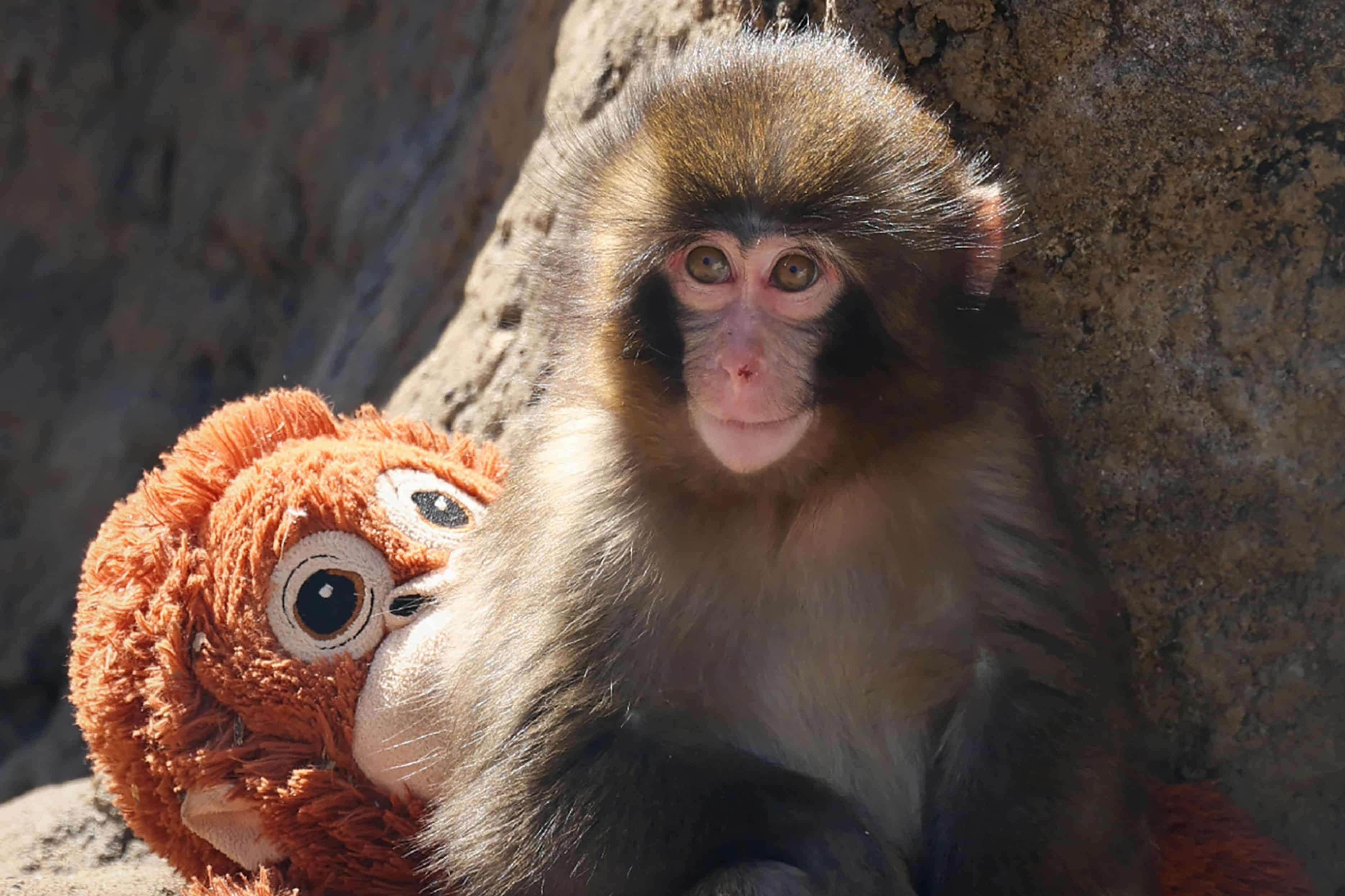 |
| Punch plays with a stuffed orangutan at the Ichikawa City Zoo in Chiba Prefecture, Japan. Photo: JiJi. |
After being abandoned, Punch had nothing to cling to. Zoo staff initially tried various methods, such as rolling up towels of different thicknesses for it to hug, before deciding to put a stuffed animal in its enclosure.
“In Japan, baby monkeys cling tightly to their mothers after birth to develop muscles and feel secure. But because she was abandoned, Punch had no support system,” said caretaker Kosuke Shikano.
He added that the monkey-shaped toy was chosen in the hope that it would help Punch integrate more easily into the group later on.
According to Behie, the stuffed animal could serve as an “attachment object,” especially since Punch is only about 6 months old and likely still needs to be breastfed.
She also emphasized that the behavior of other individuals was not bullying or abnormal , but rather normal social interaction.
Japanese monkeys have a strict matriarchal hierarchy, in which higher-status families dominate lower-status groups. Even with his mother by his side, Punch likely still faced this oppression.
However, the absence of a mother may prevent Punch from learning the necessary submissive responses. This could have a long-term impact on the animal’s ability to socialize as an adult.
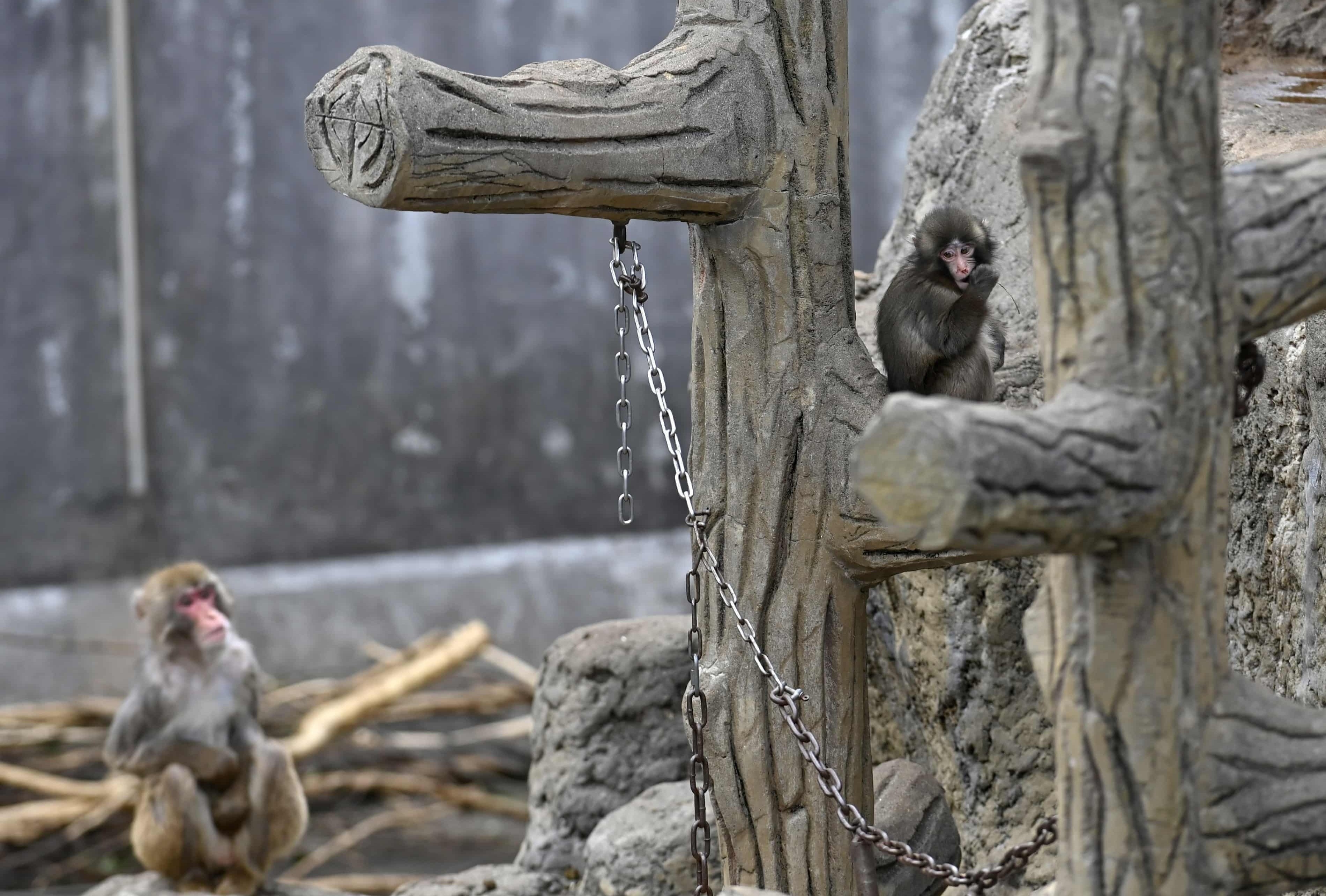 |
| Punch sits alone on a fake tree at the Ichikawa City Zoo in Chiba Prefecture, Japan. Photo: Anadolu. |
Fear
In recent days, the number of visitors to the zoo has increased sharply in order to see Punch up close. The management has tightened the barriers around the enclosure, asking visitors to remain quiet, not to use ladders or tripods, and to limit their viewing time.
Carla Litchfield, a conservation psychologist at the University of Adelaide, said that Japanese monkeys are known for their intelligence and are often used in biomedical and neuroscience research in the country. She also mentioned the fact that the species was once decimated due to crop damage.
According to her, Punch’s story reflects broader issues such as habitat loss, climate change, animal welfare in zoos, and the powerful reach of social media.
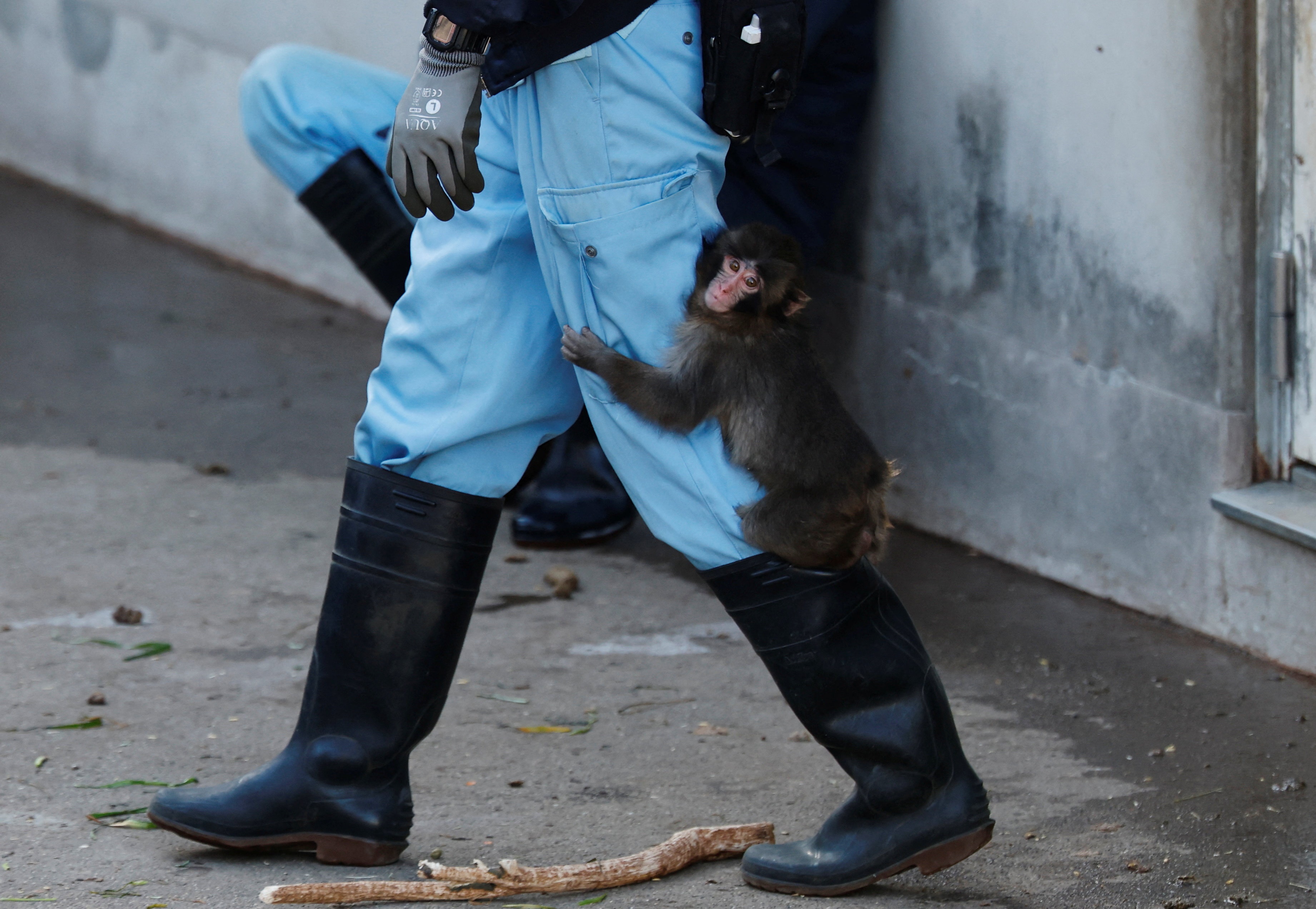 |
| Besides stuffed animals, Punch also frequently clings to the legs of zoo staff. Photo: Reuters. |
However, she warned that global popularity and millions of likes could inadvertently facilitate the illegal trade of baby monkeys for the exotic pet market, as many people consider baby monkeys cute and suitable for keeping as pets.
“Monkeys grow very quickly, Punch will be fully grown in the next four years. By then, they will no longer be small and easy to control. Monkeys need to live with their own kind because they are social animals and must be with their species to develop fully both physically and mentally,” she said.
Punch isn’t the first zoo animal to become a global sensation. In 2024, Moo Deng, a pygmy hippo in Thailand, won over the public with her distinctive personality and adorable appearance.