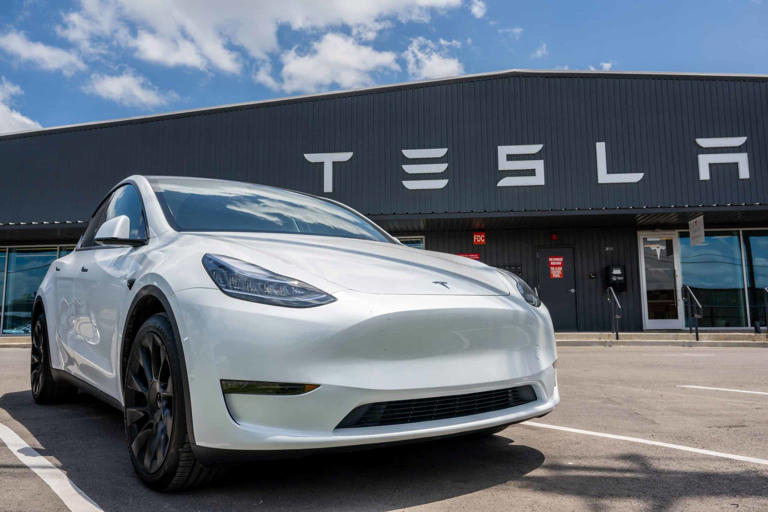
In a move that feels both shocking and inevitable, Tesla confirmed that production of its flagship Model S sedan and Model X SUV will end in 2026. For more than a decade, these two vehicles symbolized Tesla’s rise from scrappy startup to dominant force in the electric vehicle revolution. The Model S redefined what an electric car could be — fast, luxurious, and technologically advanced — while the Model X pushed boundaries with its falcon-wing doors and futuristic design.

Now, Tesla is leaving them behind.
According to company insiders, this decision is not about declining demand or failure. Instead, it represents a deliberate strategic shift. Tesla is no longer positioning itself primarily as an electric car manufacturer. The company wants to be known as an AI and robotics powerhouse that just happens to make vehicles.
At the center of this transformation is Tesla’s aggressive push into autonomous driving and robotaxis. Billions of dollars are being funneled into xAI, Elon Musk’s artificial intelligence venture, which is expected to play a key role in developing Tesla’s next-generation self-driving systems. Meanwhile, the highly anticipated Cybercab — Tesla’s fully autonomous robotaxi — is slated to begin production later this year. Unlike traditional cars, it won’t have a steering wheel or pedals, signaling a radical departure from how people think about transportation.

This pivot has sparked intense debate. Critics argue that Tesla is abandoning loyal customers who loved the Model S and Model X. Supporters, however, see it as a bold and visionary step. They believe Tesla is preparing for a world where personal car ownership may decline, replaced by fleets of AI-driven robotaxis operating around the clock.
Competitors are watching closely. If Tesla succeeds, it could dominate not just the EV market, but the entire future mobility ecosystem. If it fails, it risks losing ground to traditional automakers and tech companies racing to develop their own autonomous systems.
One thing is certain: Tesla is betting big on a driverless future. And whether the world is ready or not, that future is coming fast.