The Amboseli ecosystem has lost one of its most defining biological icons. Craig, a “Super Tusker” known for his immense ivory and gentle temperament, died in the early hours of Saturday, 3 January 2026.
His death at age 54 marks the end of an era for the few remaining African elephants carrying the rare genes for tusks weighing over 45 kilograms per side.
The Final Hours of an Icon in Kimana Sanctuary
 Craig passed away at 03:32 AM in the Kimana Sanctuary, a protected wildlife corridor within the Olgulului-Ololarashi Group Ranch. His death follows a period of declining health first noted by conservation teams in November 2025.
Rangers from the Big Life Foundation and veterinarians from the Kenya Wildlife Service (KWS) maintained a constant vigil over the bull during his final days to ensure he remained undisturbed.
The cause of death was confirmed as natural, resulting from age-related molar wear. An elephant processes immense quantities of coarse vegetation, which grinds down their teeth over time.
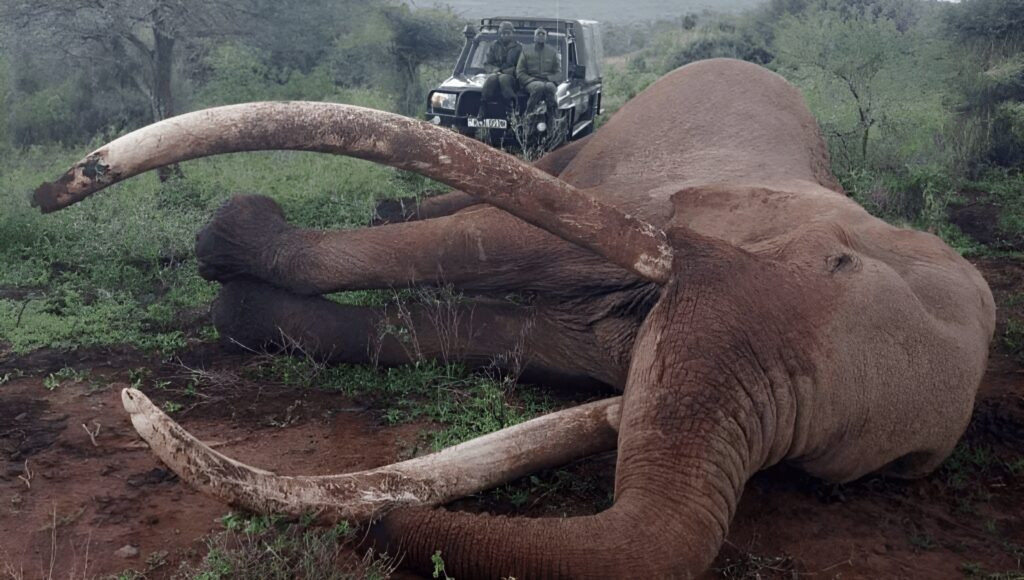
Once the sixth and final set of molars wears away, usually between the ages of 50 and 60, the animal can no longer chew or digest food effectively. This physiological reality led to a gradual loss of condition until Craig collapsed on Friday evening.
Defining the Super Tusker Status and Ivory Security
A “Super Tusker” is a specific biological classification assigned to male elephants whose tusks weigh over 45 kilograms (100 lbs) per side.
Craig belonged to this elite genetic tier, with ivory that was long enough to scrape the ground as he walked. Conservationists estimate that fewer than 25 such animals remain on the entire African continent, making his loss significant for the gene pool.
The Kenya Wildlife Service (KWS) and Big Life Foundation immediately secured the carcass upon confirmation of death. Protecting the ivory is a standard but critical procedure to prevent opportunistic poaching, even after natural death.
The tusks will be extracted, weighed, and catalogued in the national ivory stockpile, serving as a permanent record of his physical magnitude.
The CB Family Lineage and Genetic Legacy
Craig was born in 1972 to the matriarch Cassandra, the head of the “CB” family in the Amboseli Trust for Elephants’ long-term study. His lineage is well-documented, providing researchers with over five decades of behavioural data.
Unlike many bulls who become solitary or aggressive, Craig maintained a tolerance for human presence that allowed for close monitoring.
His most important contribution remains his genetic impact. As a dominant bull who frequently entered musth (a period of heightened sexual activity), Craig successfully sired numerous calves across the Amboseli ecosystem.
These offspring carry the rare hereditary potential for large tusks. While Craig is gone, the “Super Tusker” gene remains active in the population, carried by the young bulls (askaris) he mentored and the calves he fathered.
Partnership with East African Breweries and the Tusker Brand
Craig bridged the gap between wildlife conservation and national heritage through a high-profile partnership with East African Breweries Limited (EABL).
In 2021, the corporation officially adopted Craig as the living ambassador for its flagship “Tusker” beer brand. This collaboration extended beyond marketing; it generated direct financial support for the conservation measures protecting the Amboseli ecosystem.
The campaign utilized Craig’s image to verbalize the connection between Kenya’s commercial identity and its natural assets.
By linking a household consumer brand to a specific, living elephant, the partnership raised public awareness about the precarious status of the Super Tuskers. It demonstrated how corporate entities can directly fund the security operations required to keep these animals safe.
Contrasting Temperaments of Craig and Tim
Craig is often compared to “Tim,” another legendary Amboseli Super Tusker who died of natural causes in February 2020. While the two bulls were related and shared the same genetic propensity for massive ivory, their behaviours were distinct.
Tim was renowned for his roguish nature, frequently raiding crops outside the park boundaries and surviving multiple spear wounds from human-wildlife conflict.
Craig, by contrast, was known as the “Gentle Giant.” He exhibited a calmer disposition and rarely ventured into conflict zones.
He spent a significant portion of his life within the safety of the Kimana Sanctuary and the National Park, avoiding human settlements. This predictability and tolerance made him a favourite subject for wildlife photographers, as he often allowed vehicles to approach without displaying aggression.
Conservation Success Despite the Loss
The death of a Super Tusker is a sombre event, yet Craig’s passing at age 54 represents a significant victory for conservation efforts in Kenya.
During the poaching crises of the 1970s and 1980s, few bulls lived long enough to develop full-sized tusks, let alone reach their natural life expectancy. A bull carrying 100-pound ivory is a prime target for poachers.
The fact that Craig lived a full life and succumbed to old age rather than a bullet validates the effectiveness of the anti-poaching strategies employed by the Kenya Wildlife Service and the Big Life Foundation.
His survival through five decades proves that the collaborative model involving community rangers, government forces, and private conservancies can successfully shield high-value animals from illegal trade.
Status of the Remaining Super Tuskers
The death of Craig reduces the global population of Super Tuskers to a critical low. Conservation experts estimate that fewer than 20 to 25 bulls with tusks of this magnitude remain across the entire African continent.
The majority of these survivors reside within the Tsavo-Amboseli ecosystem in Kenya, making this region the final stronghold for the “big ivory” gene.
Attention now shifts to the younger bulls, known as “askaris,” who formerly accompanied Craig. These younger males often formed a protective entourage around the older patriarch, learning migration routes and resource locations from him.
Monitoring teams have identified several emerging bulls in the 35-to-45-year age bracket who display significant tusk development. These successors must survive the next decade of potential poaching threats and human-wildlife conflict to achieve the status held by Craig.
Economic Implications for Community Conservation
Craig was more than a biological asset; he was a primary economic driver for the Kimana Sanctuary. This community-owned conservancy relies on tourism revenue to fund operations and pay land leases to local Maasai families.
As a reliable resident of the sanctuary, Craig attracted photographers and filmmakers from around the world, directly generating the funds required to secure the corridor.
The loss of such a recognizable individual poses a challenge for tourism marketing. The focus for the Big Life Foundation and tourism partners must now broaden from specific celebrity animals to the protection of the ecosystem that creates them.
Ensuring the financial stability of the Kimana Sanctuary is necessary to provide the safe haven required for the next generation of bulls to mature into Super Tuskers.
The Biology of Elephant Aging and Molar Progression
Understanding the physiological cause of Craig’s death requires examining the unique dental structure of the African elephant. Unlike humans who have two sets of teeth, elephants develop six sets of molars throughout their lifetime.
As one set wears down from grinding coarse vegetation, new teeth move forward from the back of the jaw to replace them.
Craig had reached the final stage of this biological cycle. By the age of 50 to 55, the sixth and final set of molars typically begins to degrade. Once these teeth are worn smooth or lost, the elephant cannot mechanically break down food to extract nutrients.
Despite an abundance of grass or acacia in the sanctuary, an elephant in this state suffers from malnutrition. This natural progression is the leading cause of death for bulls who survive poaching and disease, ultimately resulting in the weakness and collapse observed in Craig’s final hours.
A Legacy Etched in the Amboseli Landscape
Craig leaves behind a visible void in the Kimana Sanctuary, but his presence remains through his offspring. The decades of data collected on his movement patterns have helped conservationists map critical wildlife corridors, providing the evidence needed to protect land between Amboseli National Park and the Chyulu Hills.
His ability to navigate human-dominated landscapes without conflict provided a blueprint for managing coexistence in modern Africa.
The Kenya Wildlife Service and Big Life Foundation continue to monitor the younger bulls who once trailed Craig.
These successors, now entering their prime breeding years, carry the responsibility of maintaining the genetic diversity and physical grandeur of the Amboseli elephant population. Craig’s life stands as a testament to the fact that with sufficient space and security, Africa’s giants can still live out their full natural tenure on earth.
Key Facts About The Life and Death of Craig
For researchers and conservationists tracking the history of the Amboseli Super Tuskers, the following data points summarize the confirmed details of Craig’s life and passing.
Supporting the Guardians of the Ecosystem
The successful lifespan of Craig was made possible through the continuous monitoring and security efforts of local conservation bodies.
The Big Life Foundation, which manages the rangers in the Kimana Sanctuary, played a critical role in his protection, particularly during his final years when he became more vulnerable. The Amboseli Trust for Elephants provided the decades of research necessary to understand his lineage and behavior.
Those wishing to support the protection of the remaining Super Tuskers and the corridors they rely on can direct contributions to these organizations. Their work ensures that the young bulls currently roaming the plains have the security required to grow into the giants of the future.