DODGERS TRADE 67-STEAL SPEED FOR A TEENAGE UNKNOWN: BRILLIANT LONG-TERM HEIST OR ANOTHER OVERTHINKED GAMBLE BY LOS ANGELES?
The Los Angeles Dodgers have built a reputation for thinking several moves ahead, and their latest trade is another quiet example of that philosophy in action.
On Monday, news surfaced that the Dodgers were sending speedy outfielder Esteury Ruiz to the Miami Marlins. At first glance, it looked like a modest transaction — the type that barely dents the daily MLB news cycle. But as more details emerged, the deal began to reveal the kind of long-term calculation that has helped keep Los Angeles among baseball’s elite for more than a decade.
Shortly after the initial report, MLB insider Francys Romero confirmed that the Dodgers would receive right-handed pitcher Adriano Marrero in return. Marrero is only 18 years old, a Cuban-born prospect still years away from the major leagues. Yet within the Dodgers’ player-development ecosystem, that may be exactly the point.

WHY THE DODGERS COULD AFFORD TO MOVE ON FROM ESTEURY RUIZ
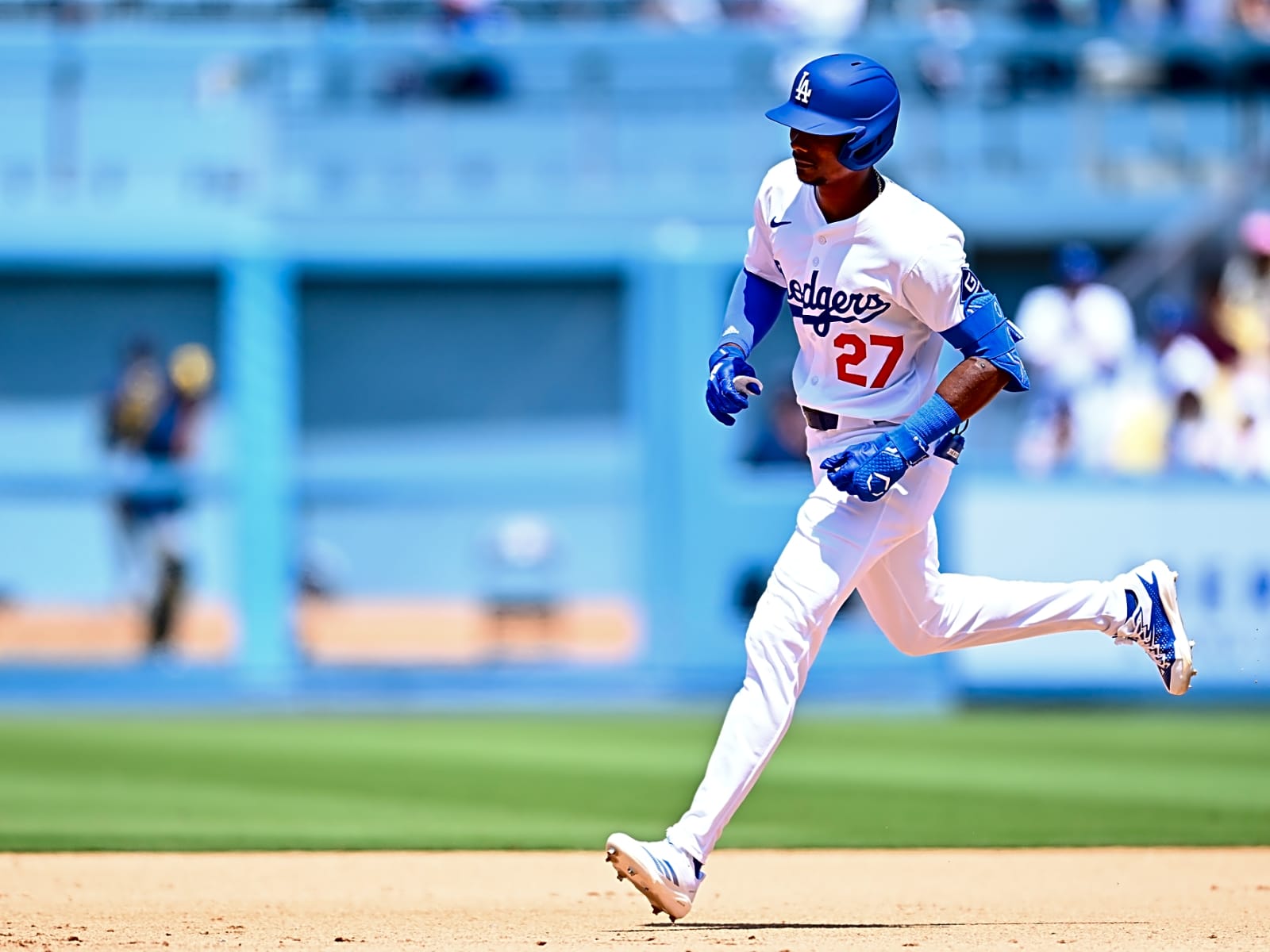
Ruiz is not without pedigree. In 2023, he stunned the baseball world by stealing 67 bases at the major league level with the Oakland Athletics, instantly becoming one of the fastest and most disruptive runners in the sport. Speed of that caliber is rare, and on paper, it would seem like something any team would want to hold onto.
But baseball value is rarely static.
In recent seasons, Ruiz has struggled to translate that elite speed into consistent overall production in the majors. His offensive limitations and uneven defensive impact ultimately made him a fringe contributor rather than an everyday cornerstone. For a Dodgers roster already stacked with positional depth, versatility, and star power, Ruiz simply became expendable.
Los Angeles, flush with outfield options and offensive firepower, had little need for a one-dimensional skill set — even an eye-catching one like Ruiz’s speed.
THE RETURN: A TEENAGE ARM WITH INTRIGUING UPSIDE
Adriano Marrero represents the opposite end of the spectrum.
Signed by the Marlins in January for a $350,000 bonus, the 18-year-old right-hander comes with minimal name recognition but significant projection. Marrero pitched 33 innings in the Dominican Summer League after signing, striking out 35 batters and flashing the kind of raw ability scouts love to dream on.
Those numbers alone don’t guarantee future success. Marrero is young, physically unfinished, and years away from facing upper-minors competition. But that is precisely where the Dodgers believe they thrive.
THE DODGERS’ DEVELOPMENT ADVANTAGE
Los Angeles has repeatedly shown an ability to identify undervalued talent early and turn it into impact major leaguers. By targeting young pitchers with projectable frames and developing them patiently, the organization has built one of the deepest and most respected farm systems in baseball.
Marrero will not be rushed. With the Dodgers already stocked with pitching talent at the upper levels of the minors — and with established arms anchoring the big-league rotation — there is no pressure for immediate returns. Instead, the focus will be on refining mechanics, building strength, and gradually unlocking the full potential of his arsenal.
In that sense, the deal perfectly aligns with Los Angeles’ long-term strategy. Rather than chasing short-term marginal gains, the Dodgers continue to invest in the future, where upside carries more weight than immediate production.
A TRADE THAT MAY AGE WELL
For Miami, acquiring Ruiz offers speed and athleticism that could fit a team looking to spark its lineup and add excitement. For Los Angeles, the trade is about patience and vision.
The Dodgers didn’t give up a key contributor. They shed a player who no longer fit their competitive timeline and system, while acquiring a pitcher whose ceiling remains undefined — and therefore tantalizing.
Years from now, this trade may barely be remembered — unless Marrero develops into something more. If that happens, it will be yet another reminder that championships are often built not only on superstar signings, but on quiet decisions made far from the spotlight.
For now, the Dodgers once again appear comfortable letting others focus on the present, while they invest patiently in what comes next.
BUT NOT EVERYONE AGREES WITH THE CALCULATION
As news of the trade spread, fan reaction split sharply. Supporters of the front office praised the move as another example of Los Angeles exploiting market inefficiencies — flipping a player with limited long-term fit for a high-upside lottery ticket.
Critics, however, see something very different.
To them, the trade symbolizes an organization that may sometimes outsmart itself. Ruiz, for all his flaws, possessed an elite tool that cannot be taught: game-changing speed at the major league level. In a postseason environment where runs are scarce and pressure is immense, one stolen base can swing an entire series.
“Speed plays in October,” one longtime Dodgers fan wrote online. “You can’t coach 67 steals. You already know Marrero won’t help until 2028 — if ever.”
That uncertainty is exactly what fuels the debate. Teenage pitchers, particularly those signed out of international programs, carry enormous variance. Development is fragile. Injuries are common. Command can vanish overnight. For every success story, there are dozens who never reach Double-A.
THE RISK BENEATH THE PATIENCE
Marrero’s raw profile is intriguing — but also incomplete. Scouts caution that DSL strikeout totals can be misleading, especially for pitchers still learning mechanical consistency. Marrero’s velocity, pitch mix, and durability remain works in progress.
Los Angeles is betting that its infrastructure can shape those variables. But development is never guaranteed.
This is where skepticism creeps in. The Dodgers’ system is exceptional, but it is not infallible. Even the best organizations miss. Betting future value against known major league production, however imperfect, always comes with risk.
Yet internally, Los Angeles appears comfortable with that reality.
WHY THIS TRADE FITS THE DODGERS’ DNA
The Dodgers have long prioritized controllable upside over specialized skill sets. In their view, stolen bases fluctuate with opportunity, lineup role, and on-base ability. Pitching, on the other hand, remains the league’s most valuable and volatile currency.
By acquiring Marrero now, Los Angeles effectively buys development time at a discount. If he progresses, he becomes either future rotation depth, bullpen leverage, or valuable trade capital. If he stalls, the cost was minimal.
That asymmetry is what front offices chase.
In contrast, Ruiz represented a capped asset. His value was already known, already limited, and already difficult to maximize within the Dodgers’ roster structure.
A SIGN OF CONFIDENCE — OR COMPLACENCY?
Some rival evaluators see the trade as a signal of organizational confidence bordering on arrogance. Los Angeles believes it can replace Ruiz’s speed more easily than it can manufacture a pitcher with upside.
That belief is not unfounded — but it is bold.
It also raises an uncomfortable question: At what point does patience become paralysis? When does planning for tomorrow begin to cost value today?
For now, the Dodgers are insulated by depth and talent. Losing Ruiz does not alter their championship odds. But deals like this slowly define how organizations are perceived — opportunistic geniuses, or teams so secure they stop valuing imperfection.
THE ANSWER MAY TAKE YEARS
This trade will not be judged in April, July, or even October.
It will be judged years from now, when Marrero’s path becomes clear — whether he develops into a legitimate major league arm or fades quietly into organizational depth.
If Marrero succeeds, the trade will be remembered as another quiet masterstroke.
If he fails, it will become part of a growing file critics point to as evidence that even the smartest organizations sometimes fall in love with potential at the expense of production.
That is the tension at the heart of the Dodgers’ philosophy — and the reason this deal has sparked such passionate debate.
One thing is certain: Los Angeles didn’t make this trade accidentally.
They made it believing time, development, and patience remain their greatest advantages in a league increasingly obsessed with immediate results.